Pitt Street Uniting Church Commemorates the National Apology to Victims and Survivors of Child Sexual Abuse
Marking the anniversary of the National Apology to Institutional Victims and Survivors of Child Sexual Abuse (October 22) is challenging.
Marking the anniversary of the National Apology to Institutional Victims and Survivors of Child Sexual Abuse (October 22) is challenging. It is confronting to speak of the sexual and other traumatising violence. It is difficult to publicly face the fact that the Royal Commission heard that the Uniting Church has been subject to about 2,500 allegations of child sexual abuse in its 48-year history. Signing up to the National Redress Scheme does not elide the painful history of our Church.
It is also challenging as many who come to our church on Sundays bring their own lived or living experience of trauma. I say living, because for some the past is alive in the present and continues to overwhelm them. We know most abuse occurs in domestic environments. 14% of Australian Adults have experiences childhood sexual abuse (18% of women and 11% of men). 41% of Australian adults have experiences physical or sexual violence since the age of 15. 1 in 2 LGBTIQ+ people have been sexually assaulted. These are just not statistics, they are the experiences of our mothers, fathers, lovers, children and grandchildren, siblings, neighbours, work colleagues, friends and millions of others we don’t know personally. Such trauma, disproportionately affects those with least power—children, women, Queer folk, First Nations People and People of Colour, economically disadvantaged, displaced people, those differently abled etc. Trauma is not just an individual problem. It is a social problem. And an ecclesial one!
So, while confronting, we need to speak of these challenging and painful experiences. We need to reflect on the past, lament the harm done to all wounded by the abuse of power, within and beyond the church, and commit to making our Church a place of flourishing for all. At Pitt Street Uniting Church, we did just that on Sunday 19 October. It was the fifth consecutive year we have done so. Aware of the sensitivities involved we offered a content forecast in the lead up to the worship service.
In our liturgy this year, we proclaimed the scripture readings in dramatic style. The nameless widow in Luke 18:2-5 begged the judge, who neither feared God nor respected people, for justice. Enacting the story from 2 Samuel 21:1-14, King David, in the hope of ending the three-year famine ravaging the land, enabled the Gibeonites to slaughter seven sons of Saul in retribution for the genocide on their peoples committed by Saul. But the famine continued. For six months, however, Rizpah, the mother of two of Saul’s sacrifice grandsons, mourned their loss. She wailed in anguish while in an effort to preserve men’s dignity, she warded the birds away from the corpses by day, and the wild animals by night. Eventually King David, on hearing of her lament gave a dignified burial to these seven men along with the unburied bones of Saul and Johnathon. On then did the rains come.
Rizpah and the nameless widow, whom we called Tikvah, reflected on this ‘text of terror’ noting how our biblical texts by promoting retributive violence, perpetuate or collude with violence and abuse. We considered how bringing these stories to life in our liturgies allows us to go beyond policies, procedures and trainings—necessary to prevent future harm—to attend to the wounds of the battered and bruised in our congregation, our homes, nations and across the world.
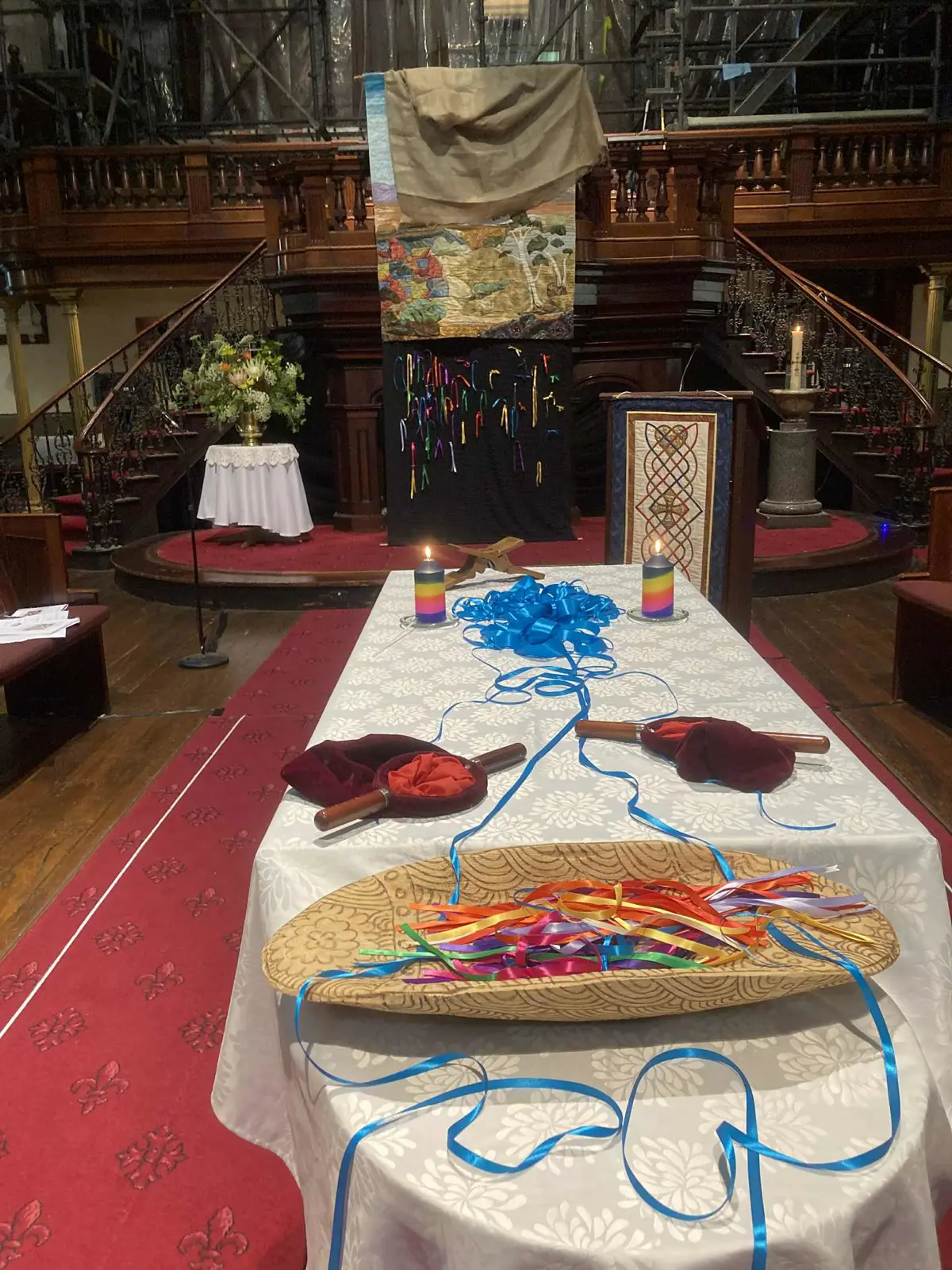
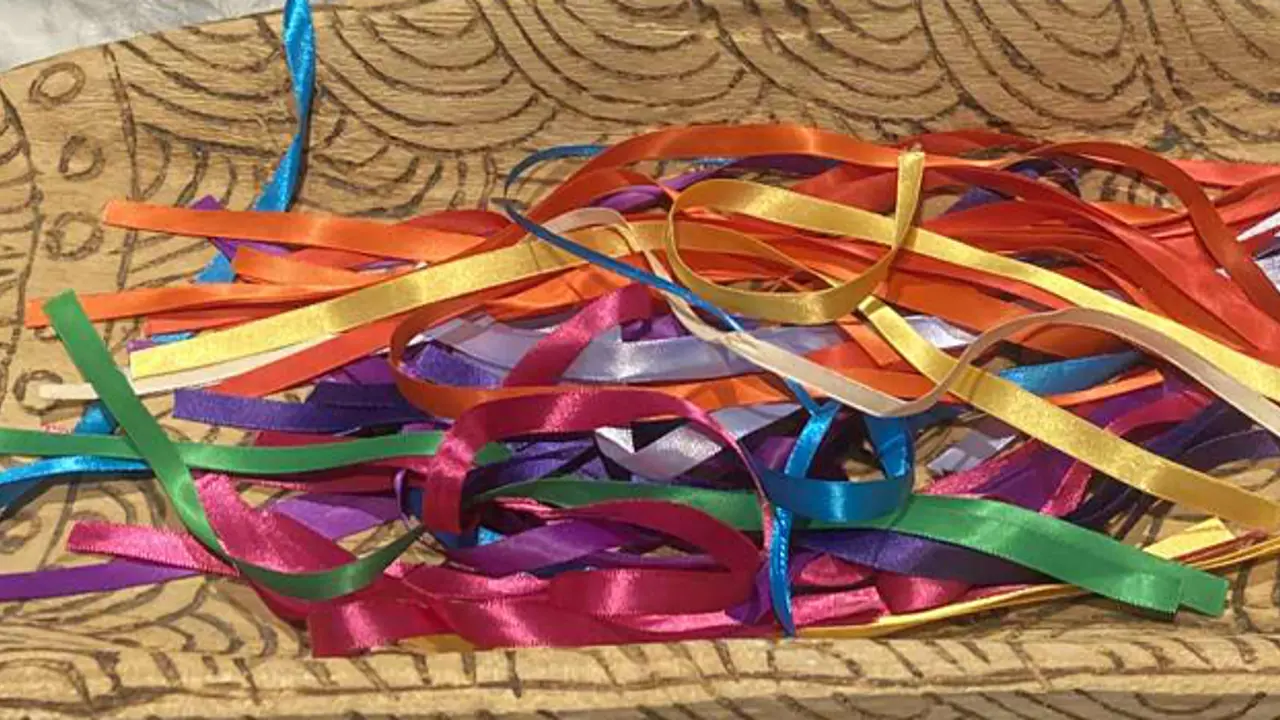
The congregation were invited to respond to the readings and reflection by offering their own silent prayer of lament and solidarity, remembering the pain endured by so many children and young people as a consequence of institutional sexual abuse, as well all those who have experienced gender-based violence, and as a gesture of commitment to protect the most vulnerable for those who abuse power. This embodied prayer involved tying coloured ribbons on a banner representative of a ‘LOUD Fence’ while a soulful cry of lament was sung by a soloist. These colourful ‘LOUD Fences’ have “become a symbol of solidarity, awareness, and change, amplifying voices of survivors ensuring their experiences could never again be silenced.”
In concluding the service, people were invited to notice how their own wounds may have been touched and were encouraged to prioritise their own self-care. We had pastoral carers available, while also encouraging people to speak with one another over morning tea. All were sent forth “in trust, truth, love, justice and hope: speaking courageously, witnessing compassionate, loving tenderly, acting justly and living hopefully.”
Footnotes
i Australian Bureau of Statistics (2021-22), Childhood abuse, accessed 11 June 2025, https://www.abs.gov.au/statistics/people/crime-and-justice/childhood-abuse/2021-22.
ii Australian Institute for Health and Welfare, “Family, Domestic and Sexual Violence: LGBTIQ,” accessed 11 June 2025, https://www.aihw.gov.au/family-domestic-and-sexual-violence/population-groups/lgbtiqa-people
iii https://www.loudfence.org.au/about-us
Elizabeth Lee is a PhD Candidate exploring ecclesial hospitality through a trauma sensitive lens in the light of the Royal Commission into Institutional Responses to Child Sexual Abuse.