More Than Classrooms
Uniting Church schools in NSW and the ACT are taking a fresh look at what it means to be a school shaped by faith. They’re asking: what does a Uniting Church identity look like in practice? And how can it be made clearer and stronger?
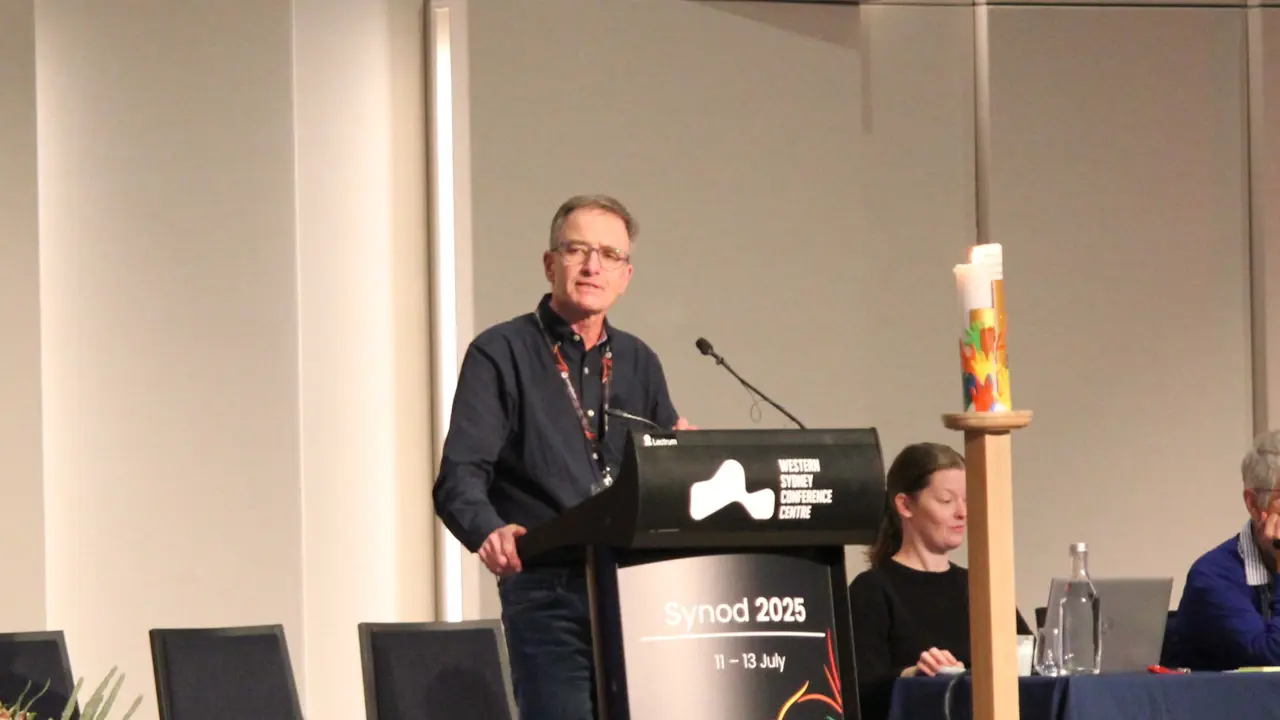
Rev. Stuart Bollom delivered the Uniting Church schools reprt to members of Synod on Day 3.
His report focused on the fact that Uniting Church schools in NSW and the ACT are taking a fresh look at what it means to be a school shaped by faith. They’re asking: what does a Uniting Church identity look like in practice? And how can it be made clearer and stronger?
"Where is God in this place in ministry," said Mr Bollom reflected on the Uniting Church relationship to our schools.
"Chaplains grapple with this question all the time. Where is God in the lives of some 11,000 young people, their families. We don't ask schools for their annual reports ort ATAR results. We ask the our schools to reflect on their mission. In effect we ask them to report on the question: Where is God?"
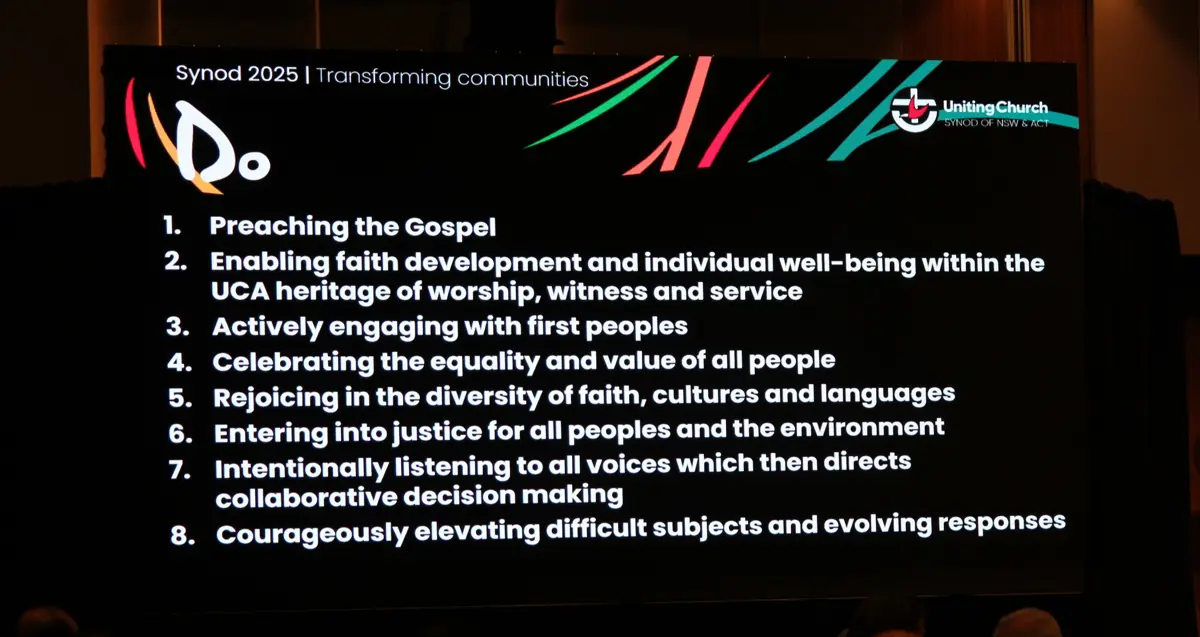
In the UCA Schools Update delivered to Synod members on Saturday 12 July by Rev. Stuart Bollom, Director of Mission (Schools) and co-written by Chaplains Rev Andrew Syme and Rev Dr Rosalie MacLarty, it points to eight characteristics that help guide this identity: preaching the gospel, nurturing faith and wellbeing, engaging with First Peoples, valuing all people equally, embracing cultural and faith diversity, seeking justice for people and the planet, listening to all voices, and tackling hard topics head-on.
Here’s what that looks like day to day:
-
Preaching the gospel: Most schools hold regular chapel services, special events like Easter and Christmas services, and offer space for faith conversations. Chaplains play a central role, sharing messages of love and hope—even in settings where many students have little or no background in Christianity.
-
Faith and wellbeing: Schools offer religious education, lunchtime Christian groups, and sometimes baptism and confirmation classes. Many also run service-learning projects, helping students reflect on why service matters and what it says about faith.
-
Engaging with First Peoples: Schools are making real efforts here, from scholarships and staff roles focused on Indigenous support to building yarning circles and including Acknowledgement of Country in gatherings. Some students also spend time learning through an Indigenous lens.
-
Valuing everyone: Schools support students of all learning abilities and care for those who identify as LGBTQI+. There’s a strong focus on mental health, and staff are also supported and included.
-
Diversity: Many schools reflect the cultural mix of their local areas, welcoming students from different faiths and none. Special cultural events, scholarships for refugee students, and awareness programs show this diversity is celebrated, not just tolerated.
-
Justice and the environment: Students lead charity fundraising and some schools take part in climate action. Environmental efforts range from solar panels to recycling projects.
-
Listening and shared decisions: While schools have traditional leadership structures, there are genuine efforts to hear from staff, students and families, and to let this shape decisions.
-
Tough topics: Schools don’t shy away from debates on ethics, faith, consent or technology. Through classes, workshops and student forums, young people explore real-world challenges and what faith has to say about them.
The report also said the schools are keen to show their Uniting Church connection more clearly—whether through signs, websites, or policies—and to challenge cultures of status and achievement that might run counter to the church’s values.
There’s also special praise for chaplains, who work at the “intersection of church and world,” often as the only visible link to the church in a secular environment.
The question going forward isn’t whether Uniting Church schools have a faith identity—they clearly do—but how they can deepen it, share it, and keep it alive for a new generation.