
Justice for Earth and All Beings
What does it mean to treat Earth — and all who live upon it — justly? This is the central question of the upcoming Stewardship of Earth fono (community meeting) that invites people of faith to act and advocate for climate justice.
What does it mean to treat Earth — and all who live upon it — justly?
This is the central question of the upcoming Stewardship of Earth fono (community meeting) that invites people of faith to act and advocate for climate justice. Organised as part of the future direction of the Uniting Church Synod of NSW and the ACT, this gathering responds to the urgent call to care for God’s creation — and one another — in the face of escalating climate change.
Climate justice
Human actions contribute to climate change (referring to global warming – the rising temperature of Earth – and its impact on the climate and weather systems). While debates continue (mainly around cause and responsibility), it is nonetheless clear that climate change impacts human communities.
The human actions that contribute a lot to climate change relate to our “carbon civilization,” which produces energy from sources that emit tons of carbon dioxide (e.g., coal, oil, gas) and methane (e.g., sheep, cattle, livestock) gases. Carbon and methane gases make Earth warmer, and the evidence is strong and available:
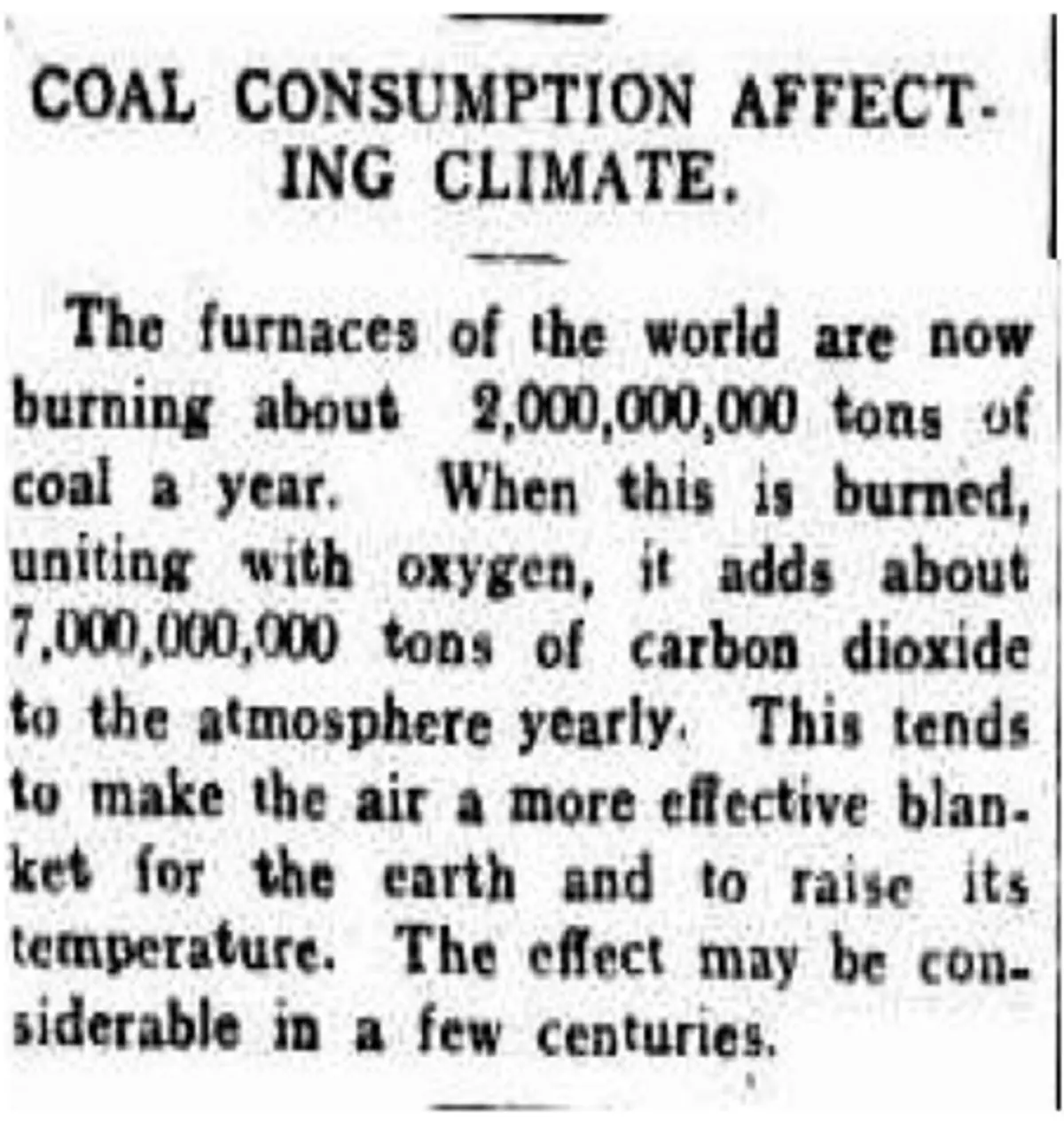
Braidwood Dispatch and Mining Journal
(NSW: 1888–1954; Wednesday 17 July 1912, p. 4)
Human communities do not contribute the same amount of carbon and methane to the atmosphere. People who use more energy (for transport, and in their homes and workplaces) contribute more carbon; people who eat meat require animals that emit methane.
Rich or poor, meat eater or not, the impacts of climate change (storms, floods, droughts, heatwaves, famines, etc.) are the same upon all people. However, rich people (in every community) can buy their comfort and pay for their diets and lifestyles. Poor people, on the other hand, who contribute less carbon and require less methane, do not have resources to mitigate the impacts of climate change.
Acting and advocating for climate justice requires addressing the disparity between how much people contribute to, versus the impacts that they face due to, our carbon civilisation. This is a key concern that will be discussed at the “Stewardship of Earth” fono.
Stewardship
Climate change impacts the wellbeing of Earth (land, sea, sky), as well as the lives and living conditions of all living beings. Humans are not the only living beings on Earth. We the humankind live alongside Other-kinds such as insects, birds, animals, plants, and water/sea creatures – they too are affected by climate change.
Acting and advocating for climate justice requires taking the lives and living conditions of Earth and Other kinds seriously, with such questions as:
- Do we the humankind treat Earth justly?
- Do we act and advocate for justice in the interest of Earth?
- Do we participate in the stewardship that Earth provides to all living beings?
- Do we relate to Other kinds in their interests rather than ours?
The Stewardship of Earth fono will address these and related questions and concerns.
Fono
Fono is one of the Pasifika terms for a community meeting – at which community members address and discuss concerns and actions that could lead to a better and more just community. This is the primary aim of the Stewardship of Earth fono.
The meeting will feature keynote addresses by Aunty Janet T. Johnson (“Bunjil’s Breath”) and Alice Salomon (“Hope in Action”), along with a series of presentations that explore stewardship through theology, ecology, and justice.
Highlights Include:
- James Aaron, “Queer ecology: At the intersections of stewardship, queer theologies, and public practices”
- Cliff Bird, “‘Value’ –- what is it and who defines it? Musings of a Solomon Islander Fisher-logian”
- Sureka Goringe, “An Unequal Climate”
- Faa‘imata Havea Hiliau, “Models of Stewardship: Mother and Church leader”
- Mikenzie Ling, “Land is a Mother, Creation is our kin”
- David Toogood, “Stewarding Self in a Collapsing World”
...and so much more.
Workshops will offer practical tools for climate conversations, and an open mic will give high school students a platform to share poems on climate justice — a moving reminder that this is about future generations, too.
This fono expands our understanding of stewardship beyond human concerns. It challenges us to consider our relationship with the more-than-human world — with insects, animals, plants, seas, and skies. Can we, as people of faith, become allies to Other-kinds? Can we live not only on the Earth but with it?
As we gather to learn from theologians, activists, and youth voices, we take one step closer to a future that honours both God’s creation and God’s justice.
Stewardship of the Earth Confernce
- Date: Saturday 14 June, 9:30am-5:00pm
- Location: Centre for Ministry, North Parramatta