From the Ground Up: Truth-Telling on Wangal Land
The From the Ground Up project emphasises that truth-telling is not only about the past. It is about the future that can be built together: a future of justice, of right relationship, and of listening to voices too long silenced.
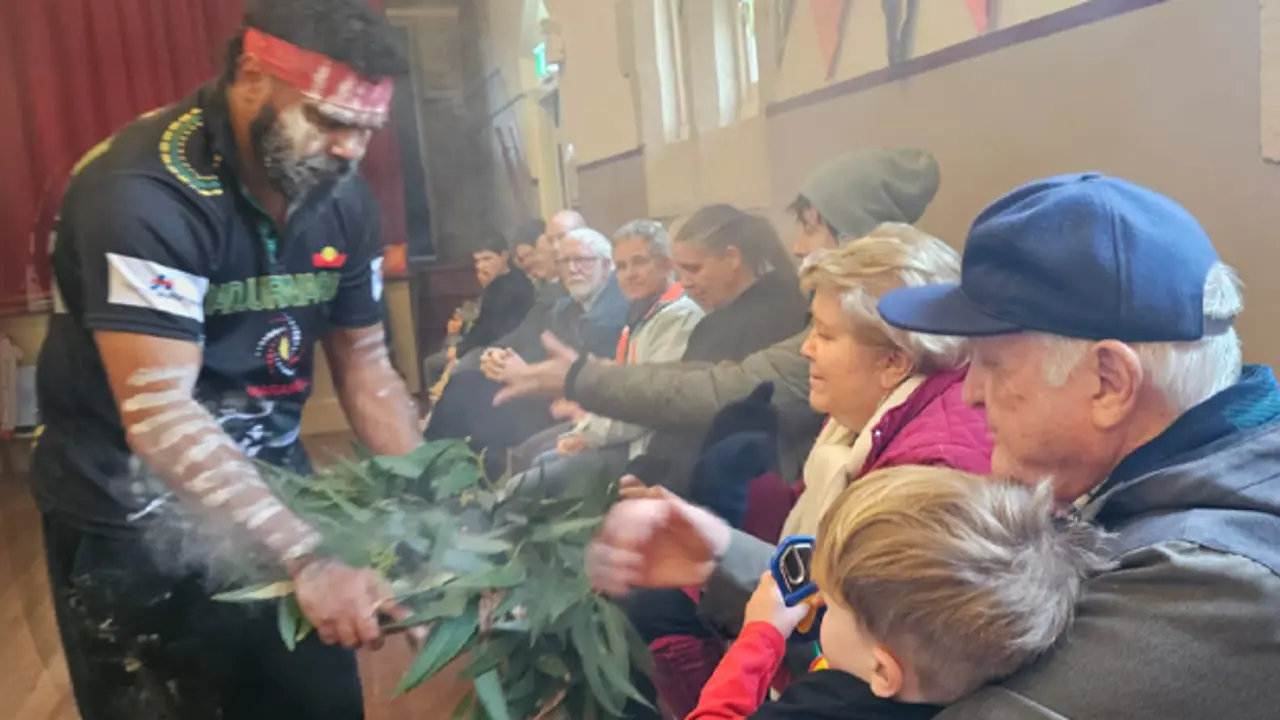
St David’s Uniting Church in Haberfield has launched "From the Ground Up", a project that invites the wider community into a space of truth-telling, reflection, and prayer. The initiative is both historical and spiritual: uncovering stories of Wangal land, naming the wounds of colonisation, and seeking God’s presence in the shared journey toward justice.
This display is also part of the church’s "Church on the Outside" initiative. Designed as a way of expressing faith on the outside of the church building itself. The congregation describes it as their way of sharing the journey of the issues they are grappling with, with the broader community who walk past each day. The idea emerged from the church’s discernment about its future at the beginning of the year.
"It's a way of us expressing our faith on the outside of our church. It is our way of sharing the journey of the issues we are grappling with, with our broader community who walk past our church," says Jennifer Richardson from St David's.
A Story Held in the Ground
For more than 65,000 years, Aboriginal peoples lived across the continent, including the Wangal clan of the Dharug Nation, who fished and gathered along the waters of Iron Cove. At the time of European arrival, thousands of Aboriginal people were living in the Sydney basin.
Colonisation brought upheaval: dispossession, violence, and disease. Smallpox—known in Dharug as galgala—swept through communities in 1789, leaving bodies on the shores of Sydney Harbour and cutting deep into the lives of Gadigal and Wangal people. Resistance soon followed. Aboriginal warriors defended their Country against convicts and settlers who pushed into hunting grounds and sacred places. The burning of Augustus Alt’s house in 1795 and the conflicts along Parramatta and Liverpool Roads are remembered as part of this struggle.
Bloody Point, at today’s Iron Cove, became a site of early resistance and reprisal. In May 1788, two convicts were killed for breaking Wangal law by interfering with canoes. The colonial government responded with a punitive military expedition—the first of its kind in the colony—setting a precedent for sanctioned violence against Aboriginal people.
Stories of Survival and Leadership
The history is not only of loss but of resilience. Woollarawarre Bennelong, a Wangal leader, became one of the most significant figures of early Sydney. Captured in 1789, he grew into the role of cultural intermediary, navigating between Eora law and British authority. He travelled to England, returned to Country, and lived out his final years connected once again with his people. His story reflects both the dislocation of colonisation and the determination of culture to endure.
Even as Europeans built homes, churches, and roads across Wangal Country, Aboriginal people maintained connection. Ramsay’s Bush, once thick with trees west of Parramatta Road, was still a place of Aboriginal presence into the nineteenth century. Though colonial law wrote over the land through grants and sales, it remained—and remains—Aboriginal land in spirit.
A Place for Reflection and Change
St David’s now stands on this layered ground. The church and its hall, built in the 1860s by the Ramsay family on the former Dobroyd Estate, host the From the Ground Up display, which invites people to listen, learn, and live differently. A “Hand Garden” allows participants to add drawings or words on cut-out hands, symbolising a shared commitment to truth, learning, and justice.
The display also carries a cultural warning, acknowledging the pain that some stories, images, and words may hold. Yet it is precisely in bringing these truths into the open that healing can begin.
Faith and Truth-Telling
For the congregation at St David’s, truth-telling is understood as part of God’s call. Church members acknowledge the role Christianity played in displacement and discrimination, and grieve alongside Aboriginal sisters and brothers. At the same time, they hold to the conviction that in God’s love, truth can bring healing, reconciliation, and freedom.
The From the Ground Up project emphasises that truth-telling is not only about the past. It is about the future that can be built together: a future of justice, of right relationship, and of listening to voices too long silenced.
In this vision, the people of St David’s seek to be always listening, learning, and living change—from this ground, up.
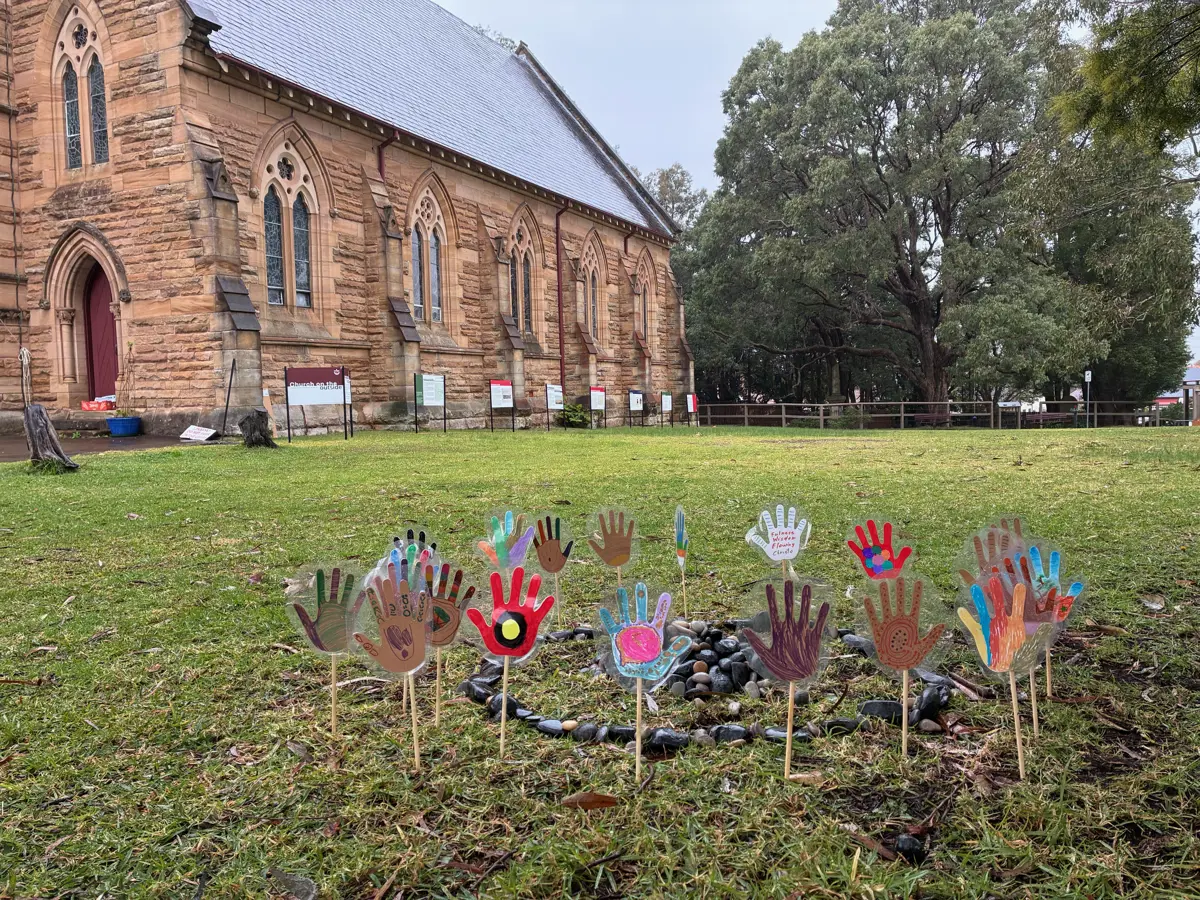
St David's "Hand Garden" allows participants to add drawings or words on cut-out hands, symbolising a shared commitment to truth, learning, and justice.
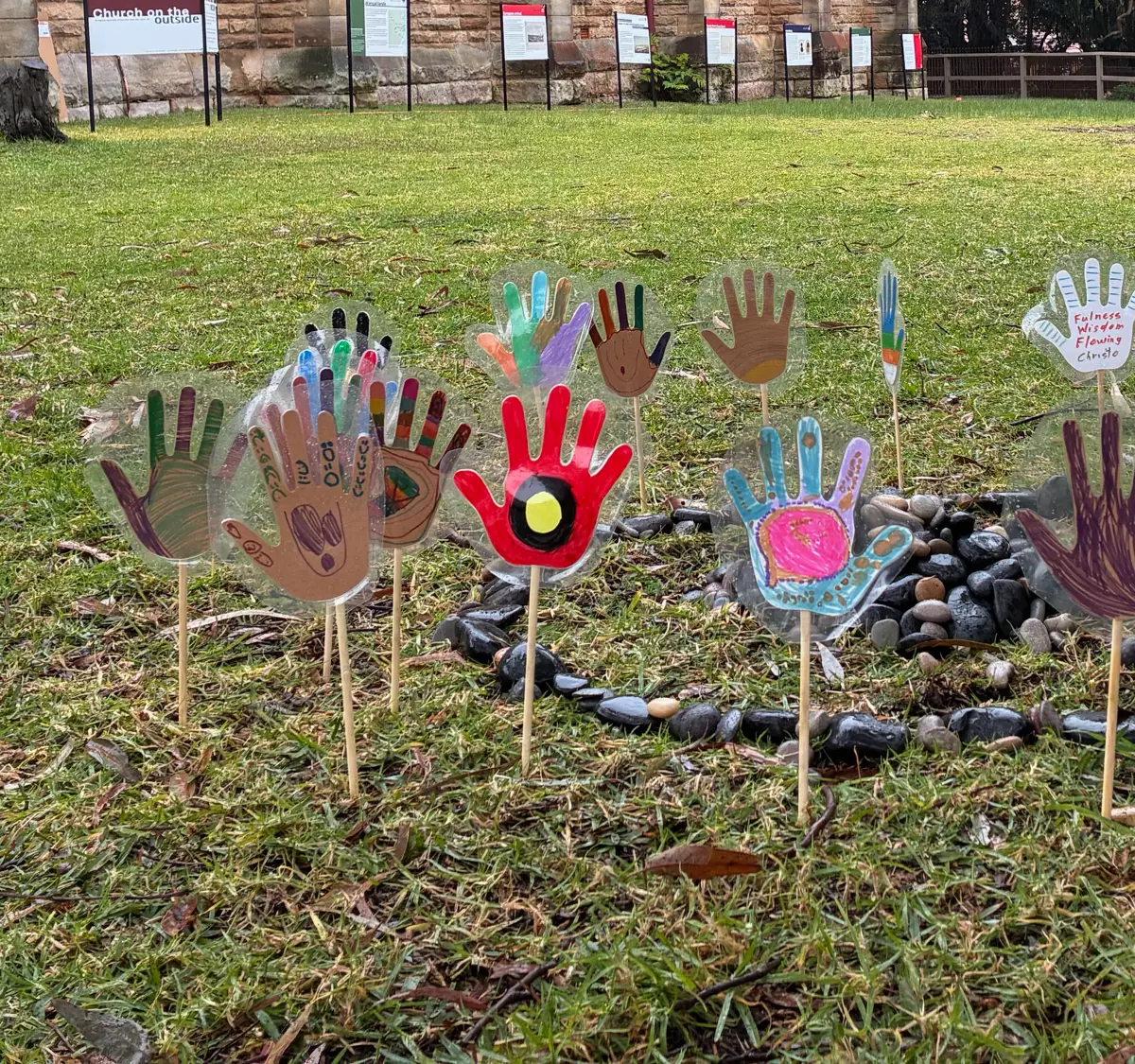
For the congregation at St David’s, truth-telling is understood as part of God’s call. Church members acknowledge the role Christianity played in displacement and discrimination, and grieve alongside Aboriginal sisters and brothers. At the same time, they hold to the conviction that in God’s love, truth can bring healing, reconciliation, and freedom.