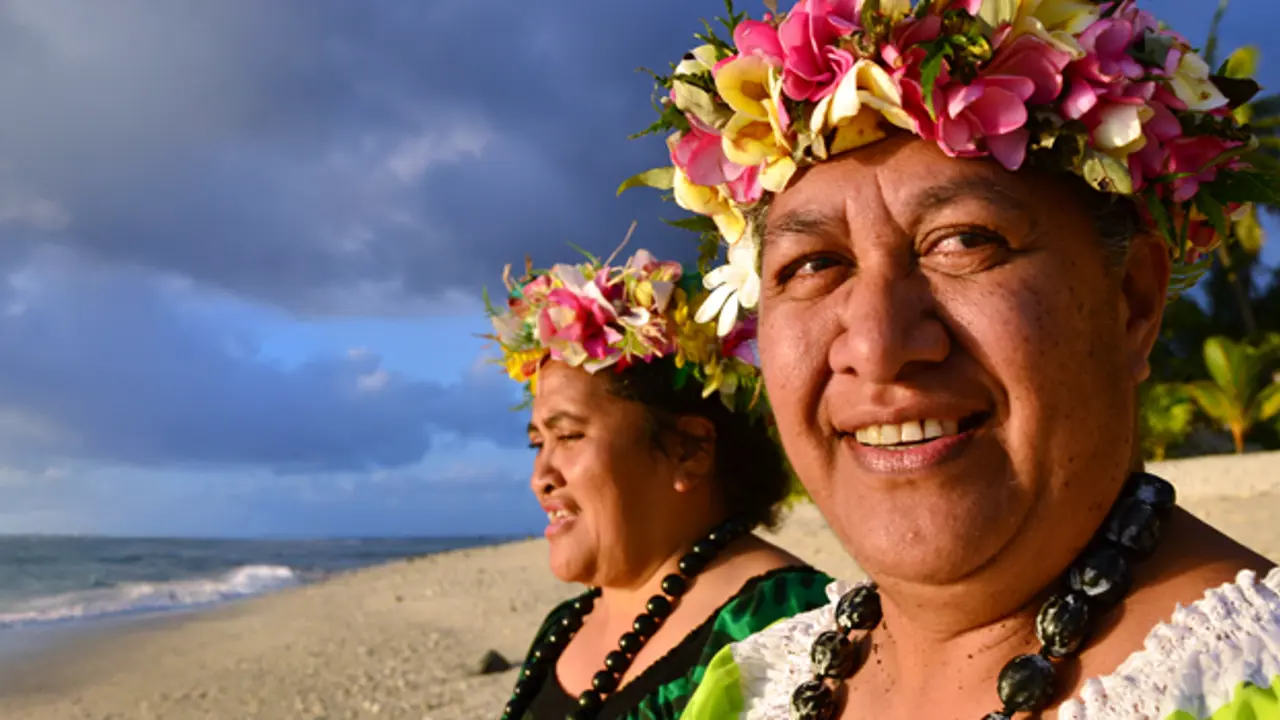
Climate and Women: Pasifika Catalysts
Lest we forget, women and children are burdened by climate change.
In every crisis, there are unnamed victims and unheard pathfinders. In the Climate space, attentions have recently been given to the devastating impacts of climate change upon Pasifika islands – and the implications of those to the cluster of islands now known as Australia.
Pasifika voices
The NSW and ACT Synod has intentionally given space for Pasifika voices to speak on behalf of Pasifika islands and islanders. Our Moderator, Rev. Mata Hiliau, takes a lead in this cause, in the company and support of allies in Uniting Climate Action Network (UCAN see here), UnitingWorld (see here), Edmund Rice Centre (see here), among many others.
In the worship space (which relates to how we be and do church), i appreciate the efforts by With Love to the World (see here) to include Pasifika contributors.
We obviously need to collaborate for climate justice. We also need to hear Pasifika voices outside of the church, and beyond our shores. Hence this catalyst reflection, inviting engagement with voices from three Pasifika women.
Women and children are affected
Lest we forget, women and children are burdened by climate change. This is the key concern of Belyndar Maonia Rikimani, a climate activist from Solomon Islands (see here):
“[W]omen are at the very forefront of climate change and it will disproportionately affect the health, safety and well-being of women, young girls and children of the Pacific and all of the Global South. … Pacific women, many of whom are known to be the breadwinners for their families, will be the most affected.” (my italics)
Insofar as women and children are at the forefront of the climate crisis, they can help us find solutions:
“[V]arious studies have proved that women and girls in every society were the ones who have been effectively responding in times of crisis and actively working towards the creation of a more just and sustainable world.”
The solutions will be different from island to island. Belyndar describes some of the solutions for Solomon Islands, inviting us to listen to our women and children to find solutions for our islands.
Climate justice requires gender justice
Hilda Heine, president of the Marshall Islands, adds that “we cannot solve the climate crisis without gender equality” (see here). Put another way, we cannot attain climate justice without also attaining gender justice (see also the article and book by Geraldine Terry, from Uganda).
This is a helpful reminder that justice, for which the UCA is committed, is a weaving of various subjects and struggles. The opportunities for climate justice interweave with the needs for gender justice, alongside race justice, class justice, caste justice, economic justice, political justice, and so on.
In this regard, we also need to collaborate with other justice movements.
For the future
Elena Pasilio, a mother from Tokelau who raises her daughter to care for baby turtles, remembers one of her late grandfather’s teachings (see here):
“He taught me about our ocean and our land was just to respect that and not to feel like it’s yours, because it’s not. It belongs to the future. We’re just passing by.” (my italics)
As we pass by, we work for justice on behalf of folx known in reggae circles as “tomorrow people.”
So what?
When we celebrate International Women’s Day on March 08, may we listen to women and children, and work together for gender justice as a critical component of climate justice.
And may we value the voices of Pasifika women, for rising from the salted (is)land-ground, and not because they say the same things as white scholars and global organizations (e.g., Greenpeace (see here) and UN (see here and here) have also indicated that women are key to climate action).